News
Texts by Slobodanka Poštić
Natural perfume creators from the ex-Yugoslavia region have founded the association Fragrant Signatures. Creators from Croatia, Serbia, Bosnia and Herzegovina and Slovenia have joined. We are in the process of developing a work plan and collecting ideas for lectures that we will include in our further education. Our socializing is going great, the atmosphere is optimistic and enthusiastic.
We plan to engage in educating the public about the good practice of paying attention to the activities of our own nose as a method of promoting well-being and improving the quality of life. We want to popularize the idea that the scents we surround ourselves with should be of natural origin.
We intend to find ways to get involved in various festivals, tourist events, libraries’ programs, fairs, etc.
And we will certainly try to network with similar initiatives around the world! For now, the most promising collaboration is with the Turkish Aromatherapy Association. If we find good topics and ways for joint activities, international cooperation is open to us. There are interested creators who have completed some of the levels of the Fragrant Signatures education all over the globe!
And we have a lot to learn from societies where the smell culture is far more developed than ours!
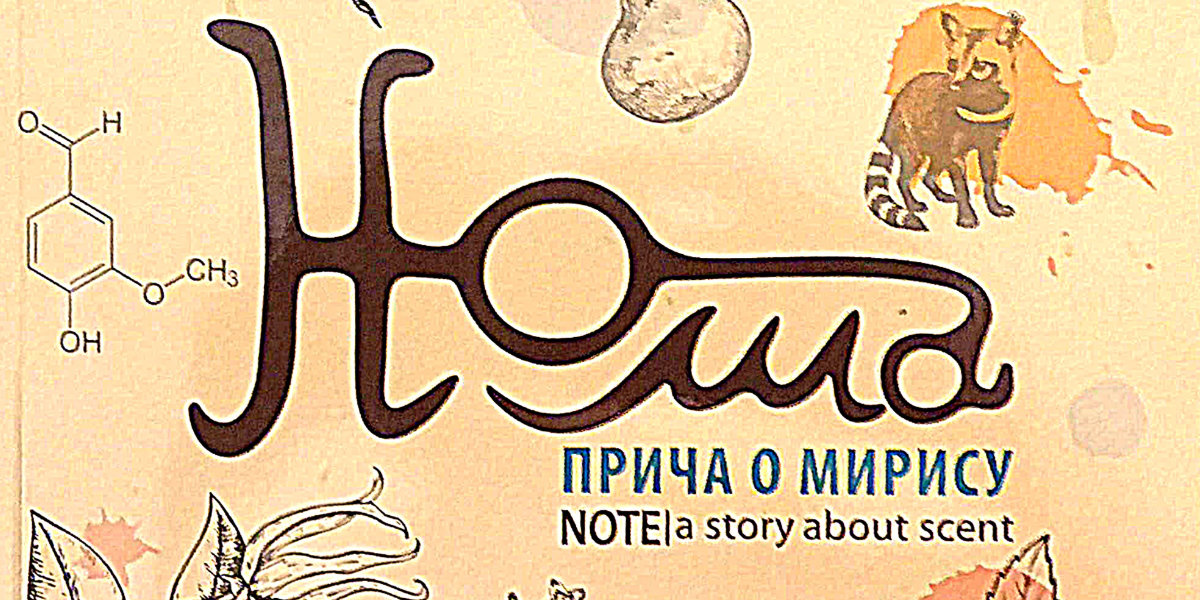
If smell is a topic that interests you, the visit: Belgrade’s Museum of Science and Technology! The exhibition “Note – a story about scent” will be held there from November 25, 2025 to April 30, 2026. The offer of such pleasure is very rare and you will not find it anywhere closer, so take your nose to the excitement!
Neighbors, congratulations! The realization of the Belgrade exhibition was supported by the Ministry of Culture of the Republic of Serbia, the French Institute in Belgrade and the International Perfume Museum in Grasse. The accompanying program of the exhibition offers workshops, lectures and expert tours. The exhibition is also accompanied by a good book (the text is in Serbian and English), and it testifies to the thoroughness of the entire undertaking.
The sense of smell, to which we do not pay particular attention in this part of the world, plays an important role in our survival, and strongly influences emotions and memory. That means the quality of life! Therefore, intelligent behavior would include keeping this in mind.
As someone who has been teaching people how to create natural perfumes for the past two decades, I am saddened by the fact that in our region we pay so little attention to the experiences of our noses.
Considering that pleasant scents significantly affect the level of satisfaction, and that they play a significant role in maintaining a good mood and thus the body in balance, such behavior is, to put it mildly, unintelligent.
But it doesn’t have to be that way, it doesn’t even take much effort to change such a habit. You just have to decide to put your nose on permanent duty. And choose the scents to surround oneself with.
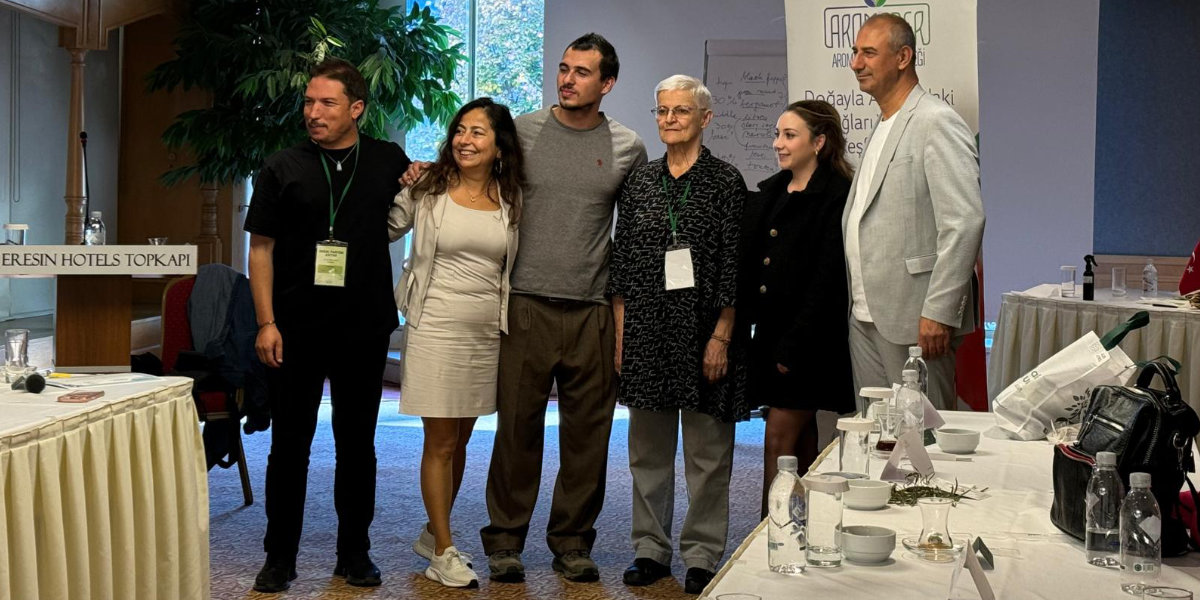
In many places in the world, the attitude towards the olfactory dimension of life is enviably different. The more time passes since my visit to Istanbul in the fall of 2024, the more often I think about my experience there, with a slight mixture of sentiment and envy. In Turkey, they treat olfactory experiences much differently than is usual here (in Croatia). For example, they use their Kolonya liberally in various situations. Both the everyday and the extraordinary ones. It is not unusual for the hosts to greet you at the door with a bottle of hand sanitizer when you come to visit someone. Or that, if you are traveling somewhere by bus, the driver “jumps” you upon entering by offering the same procedure.
There are many aromatherapy products on the market. The offer of the company Nature & Nurture is impressively abundant and expertly selected. Their products are formulated by pharmacist and aromatherapist Sevil Agalar.
Then, Istanbul is a city where there is a small, but extremely informative and expertly designed Perfume Museum. The one in Grasse, France could, to its advantage, take some ideas from the one in Istanbul.
The result of such generally accepted attitude towards smell as an important component of life was the fact that at the Istanbul’s Faculty of Pharmacy, as part of an aromatherapy workshop whose goal was to inform students about natural solutions, I was able to give a lecture on the option of creating perfumes from natural fragrant materials. I accompanied the presentation with an exhibition of such perfumes, which was a surprising and gladly accepted additional attraction for everyone.
And from the lectures of Turkish professors, I learned about the cultivation of fragrant herbs and the production of essential oils in Turkey. From the presentations of foreign and Turkish experts, I found it very interesting to learn about the local application of the principles of sustainability.
And the atmosphere that prevailed at the education on the creation of natural perfumes that I led for the next two days was absolutely beyond the scope of my previous teaching experience. In terms of the number of participants, the amount and types of questions asked, the kind gestures, the joy of the shared fragrant experience, and the roles of obedient students that everyone took on (including the participants-university professors). And in terms of the complete immersion in the fragrant impressions of all those present, who flocked from all over Turkey and neighboring countries. A surreal, indescribable experience.
The ecologically conscious inhabitants of this blue dot of ours in space know that we are an unreasonable, ruthless, pest species that has pushed many other species with which we share the hospitality of the planet over the edge of survival. And many more species are being pushed, extremely unreasonably, but diligently, towards destruction.
Let’s consider how creators of natural perfumes should behave in order to continue to engage in their activities with a clear conscience and ensure the sustainability of their actions.
It is important to monitor information on the status of plant and animal species from which the fragrant materials used in creation are produced. Several organizations (e.g. CITES, IUCN) monitor global nature conservation and sustainable use of natural resources, so you can look for information on their websites. I find the list published every six months by the Airmid Institute extremely practical, and you can get it for free by contacting the attached link. It is available in several languages, including Croatian. The list precisely monitors the endangered status of species and when deciding whether to buy some material, you can safely rely on their judgments. That is a great comfort and relief!
Let’s take a look at the current situation on the market of natural fragrance materials. Globally, the following are critically endangered: agar wood, costus, spikenard and gray amber. These scented materials should definitely NOT be purchased, because it is practically impossible to obtain data on the ethics of some production, so the decision to use them is potentially highly problematic.
Once you have the list in front of you, be sure to check out the National & Regional section to see the status of endangered fragrance materials in various parts of the world. It is good to know the situation closer to your location and your own doorstep.
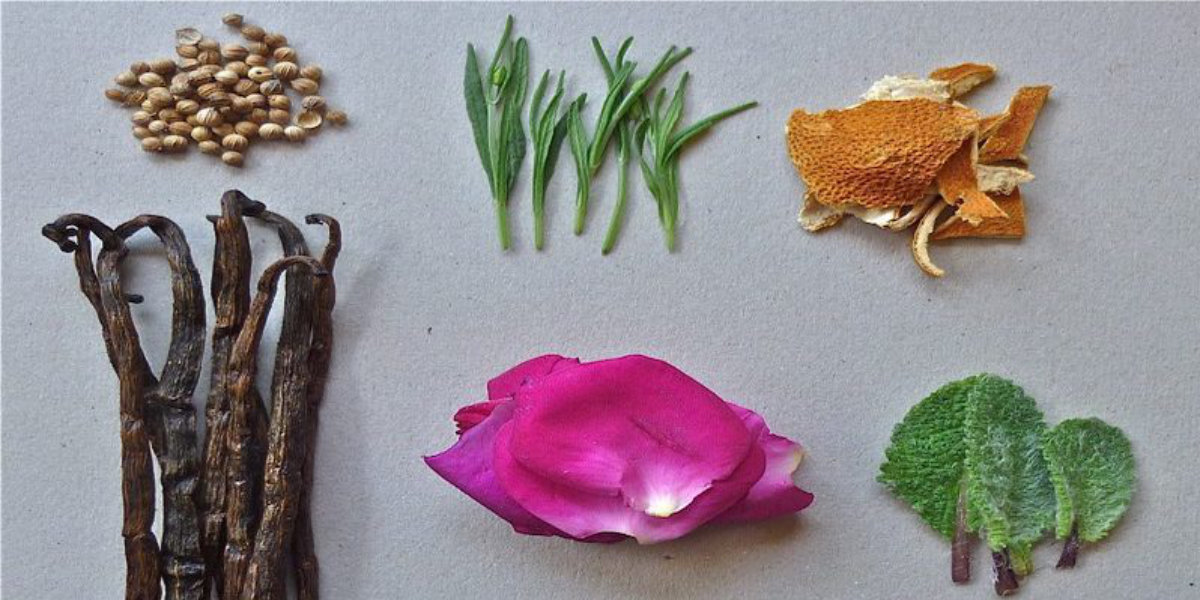
You should also carefully decide on the acquisition of materials such as vanilla extract, incense, common myrrh, Atlas cedar, forest sandalwood…
The creation of natural perfumes is significantly different from the creation of commercial, synthetic perfumes. Creators of natural perfumes work with complex materials, not with individual scent molecules that are the “tool” of commercial perfume creators.
Experienced and competent creators of natural perfumes who have mastered the art of making analogues (bases, doppelgangers) will, with a little thought, analysis of smells and practical attempts, surely manage to find suitable replacements for materials that they cannot use.
Today, an increasing number of consumers are turning to green options. They are concerned about what foods they consume, what preparations they apply to their skin, and what they use to clean their homes, so it is no longer impossible to expect increased interest in natural perfumes.
When asked whether nature and its resources can support the transition to natural perfumery, while respecting ecological standards and sustainability rules, I would be inclined to answer positively! Of course, with the commitment of high competence of the creators and a lot of care for the environment. It would be possible! A great challenge is in sight.
And finally – homework for creators of natural perfumes: try to make a fragrant analog/doppelganger of vanilla tincture from the fragrant materials you have at your disposal! Good luck in finding a combination that will please your nose!
p. s. You can find thoughts and suggestions about creating analogs/doppelgangers in subsection 8.3. of the Fragrant Signatures manual.
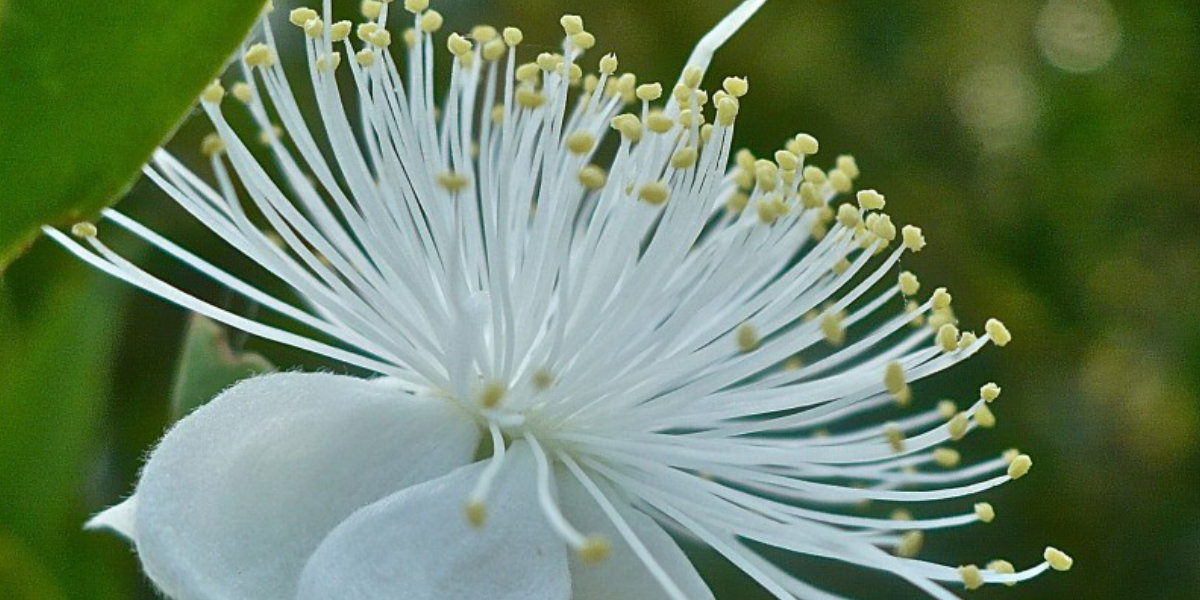
Mankind has brought some natural aromatic materials to the brink of extinction. The most endangered are rosewood, spikenard, agar/oud, ambergris, vanilla (according to many polls, most people’s favorite scent), sandalwood… Many other materials are severely endangered.
The Airmid Institute and the School of Natural Perfumery Fragrant Signatures are collaborating on a project that we have decided to call Fragile Nature. We want to create perfumes that would reflect the very essence of concern for nature’s preservation and the desire for sustainable behavior. With the natural perfume we are creating, we want to raise public awareness about certain endangered species and demonstrate the possibility of creating fragrant products without using critically endangered aromatic materials.
According to the perfume formula we made, we needed two materials (rosewood essential oil and vanilla absolute) that are obtained from critically endangered species. In order to avoid the use of these materials and further deterioration of their endangered status, we decided to create their analogues, i.e. blends of materials that imitate their scent.
We work slowly and with dedication, investing all our knowledge about natural perfumery, the experiences of our noses, strong will and enthusiasm. We create analogues from the materials obtained from available, non-endangered species. When these blends are ready, we will include them in our palettes with other individual fragrant materials and use them in the creation of the Fragile Nature perfume.
Do we even need to mention that we are extremely excited about this project?
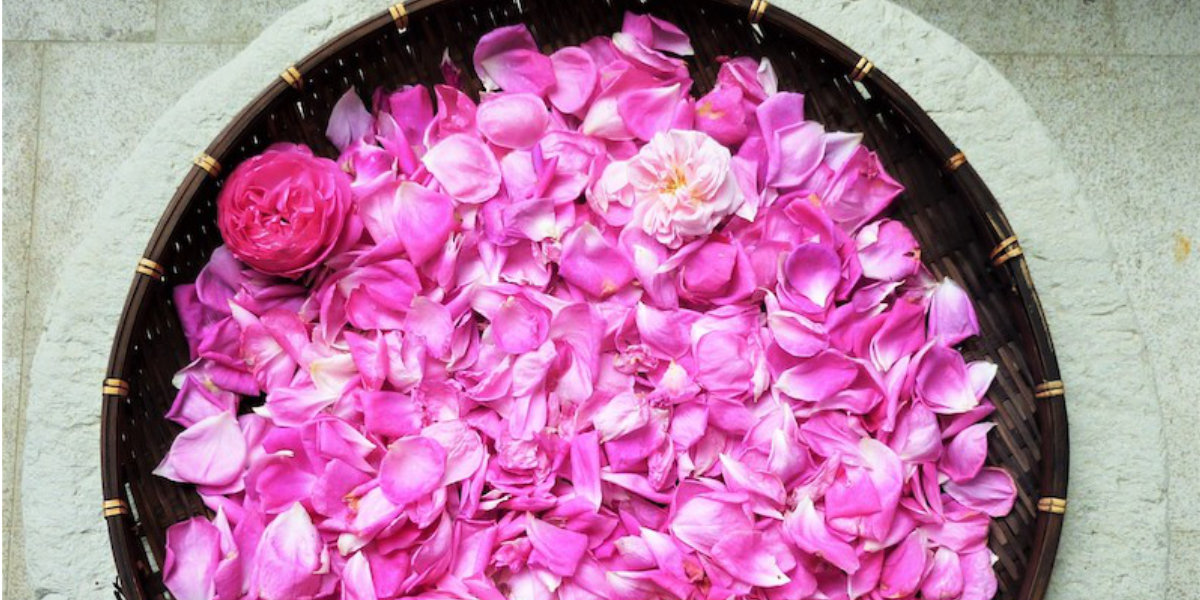
The Slovenian Nova Gorica, along with the German Chemnitz, is this year’s European capital of culture. In the rich programme of interesting events in Nova Gorica, the organisation on Sunday, May 11th was entrusted to the N.O.S. Society.
The Kostanjevica monastery near the city has a beautiful rose garden and the atmosphere there will be used for an exhibition of natural perfumes on the theme of roses. The perfumes were created by the N.O.S. members, and visitors to the exhibition (12:00 p.m. to 5:00 p.m.) will, in addition to smelling the perfumes, be able to talk with their creators, comment on their impressions and learn first-hand about the inspiration for the perfumes, the scent components used in the formulas and the course of the demanding creative process. There will also be an opportunity to buy perfumes.
Inspirational workshops will be organised for children visitors from 2:00 p.m. to 4:00 p.m. in the rose garden.
At 6:00 p.m., I will hold a lecture titled Fragrant Dimension of Life in SReČNA HIŠA. Visitors will have the opportunity to smell natural fragrant materials, talk about their impressions, choose a combination of scents that they like and take that set of blotters/scent testers with them as information for a potential fragrant venture of theirs.
The book Fragrant Signatures will be presented during the lecture.
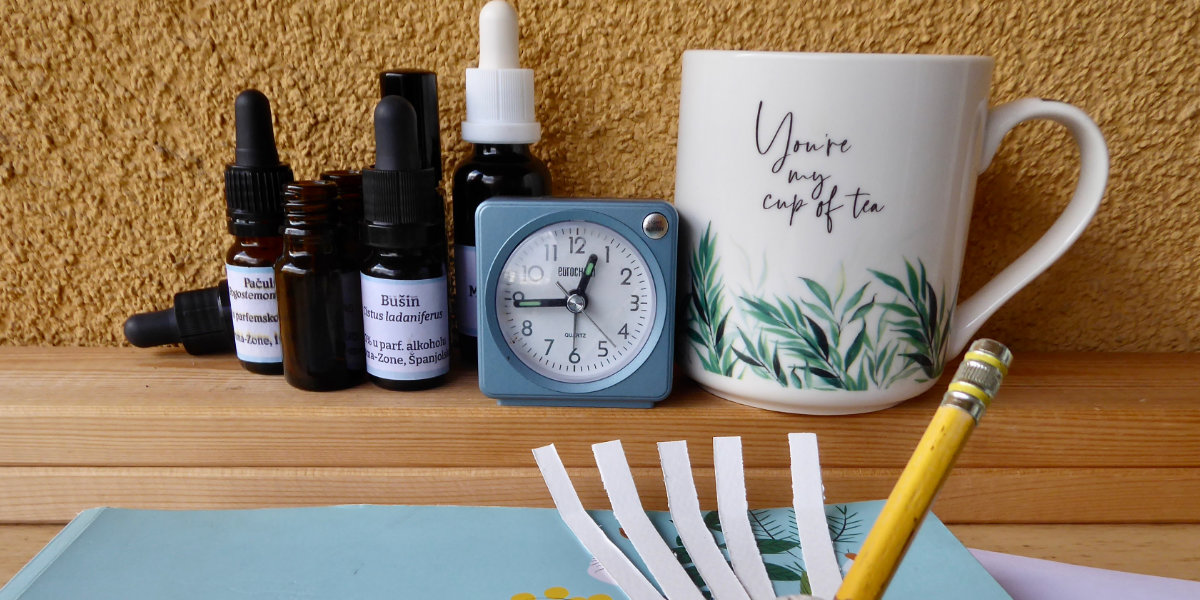
Here we are for the third time! This time, the camp of creators of natural perfumes is being held on the island of Krk from October 3–5 this year.
The idea is as follows: the participants should read Stories from the Past by Ivana Brlić-Mažuranić, choose one character from the stories and create a perfume that would represent that person.
The creators should arrive on Krk with the perfume already created and all the materials they need for their work. The task of this year’s camp is to further hone and refine creative skills. For this purpose, the participants will explore possible modifications and improvements of their perfume.
The perfume modifications decided upon at the end of the work will be exhibited on Sunday, October 5 in Rijeka, in Villa Ružić, Pećine 5. The exhibition starts at 12 noon.
We hope for a good attendance at the exhibition and look forward to the visitors’ impressions and questions.
Citizens of Rijeka, make an effort, come to smell and evaluate!
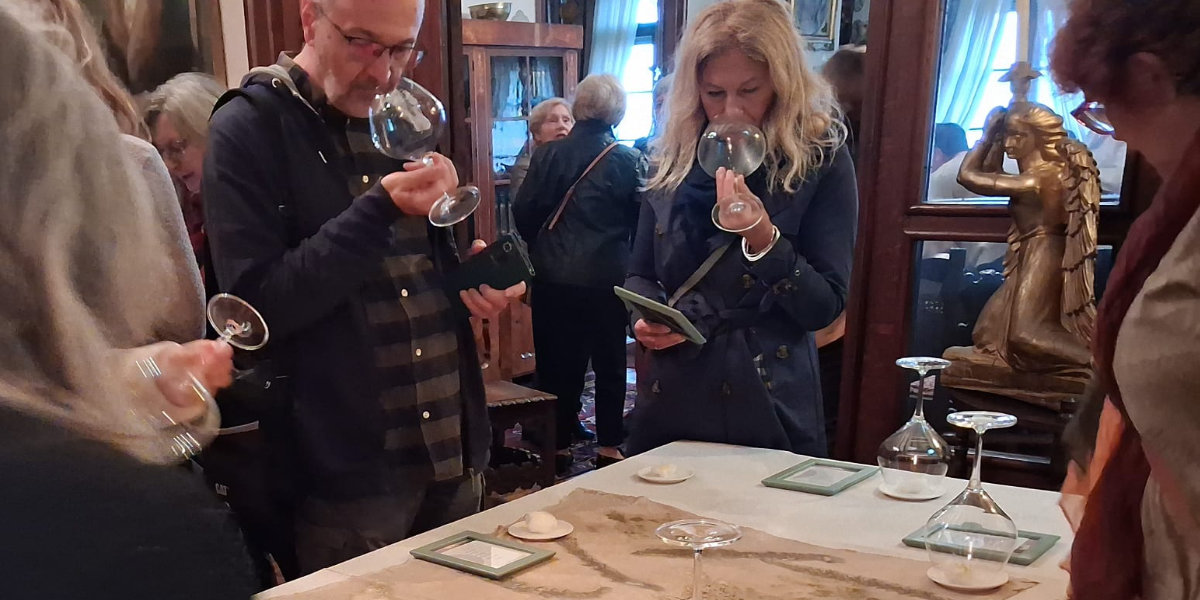
On Sunday, October 5th, an exhibition of natural perfumes will be held in Rijeka at Villa Ružić, Pećine 5, entitled “Sense of fragrance through stories from the past”. The exhibition starts at 11:30 a.m., organized by the N.O.S. Society, and will be accompanied by a performance by the PZM Girls’ Choir, Josip Kaplan, and an exhibition of works of art by Mirjana Kajdi Žužić.
Given that the awareness of growing environmental pollution and the unhealthy loss of contact with nature is increasingly developed, a significant part of the population begins to take care to use quality products of natural origin wherever possible. This applies to perfumes, too.
Since the beginning of the century, natural perfumes have been increasingly competing with mainstream synthetic variants on the world market. It’s nice to know that our region is not far behind the world trend of creating natural perfumes. In fact, we are among those who are leading the way, because education on the creation of natural perfumes has been taking place for more than twenty years and several hundred people (from the region, but also from all over the world) have completed it.
Our competent and talented creators (some of whom have passed the strict IFRA criteria and registered their natural perfumes on the international market) will meet before the exhibition, work on perfecting their creative competence, refine the formulas of their latest perfumes and then exhibit them at this exhibition.
We ask the potential audience to tune their noses and come for a sniff-pleasure and talk about the fragrant dimension of life! :)